This title is officially my favorite of the
current season! Aldnoah.Zero being a very close second. Terror in
Resonance (Zankyou no Terror) is the newest work from the dream team of
Shinichiro Watanabe (Cowboy Bebop, Samurai Champloo, Space
Dandy), Yoko Kanno (Wolf's Rain, Cowboy Bebop, Escaflowne), and
animation studio Mappa (an offshoot of Madhouse [Hunter X Hunter,
Redline, Ninja Scroll]). The production levels on this show are as
superb as one would assume with a pedigree like that! The very basic
premise centers around a pair of teenage terrorists and a female high
school student they manage to rope into their twisted plot for revenge.
Why they are willing to go to such extremes is the big mystery thus
far. This show may be hard for some people to watch, especially those
affected by the 9/11 attacks and/or the Boston bombing. One cannot help
but draw correlations between this series and those tragic events.
If that is not an issue for you then there's no reason you shouldn't
give this show a chance. It has its own twisted style that sucks you
right in and has you on the edge of your seat in a desperate need to
learn more about these disturbed individuals. What trauma could have
been inflicted upon them that would justify this level of retaliation???
It's a question that I can't wait to learn the answer to!
It is simulcasting on Funimation for subscribers with the free streaming popping up on Hulu a week later. Check it out!
P.S. I haven't forgot about SAO 2, I'm just waiting to see a couple
more episodes. It has started off rather slowly. Keep an eye out for
it soon!
Saturday, July 19, 2014
Saturday, July 5, 2014
Early Impressions - Summer 2014: Sailor Moon Crystal
Just
finished watching the premier of Sailor Moon Crystal. While I don't
have the nostalgia factor that many of my friends do for Sailor Moon, I
found it to be a pleasant little show. It has solid production values
and good pacing. I already like it better than what I've seen of the
original series (about 12 episodes). I don't love the original but I
certainly don't hate it either, it makes for
good background noise. Thankfully Usagi is nowhere near as obnoxious
in Crystal, that is the one thing I don't care for in the original
series. Crystal seems to have found a much better balance between the
comedy and main plot line. Admittedly I have never read any of the
Sailor Moon manga so I'm not sure which is more accurate (I would assume
Crystal is).
In summation: Sailor Moon Crystal is a must-see for fans of the original. It has the potential to be a "gateway anime" for a new generation of fans that will ensure this title remains important to the medium. It is streaming on Crunchyroll, Hulu, and NicoNico.
Next up: Sword Art Online II
In summation: Sailor Moon Crystal is a must-see for fans of the original. It has the potential to be a "gateway anime" for a new generation of fans that will ensure this title remains important to the medium. It is streaming on Crunchyroll, Hulu, and NicoNico.
Next up: Sword Art Online II
Saturday, June 21, 2014
Exploring the Concept of Moe and the Piracy of Anime
Anime Piracy
Since the advent of broadband internet and programs such as Bittorrent, piracy of media has been a major issue. Millions, potentially billions, of dollars are lost each year to the seemingly unstoppable onslaught of internet piracy, yet Hollywood seems relatively unphased. The entertainment industry is a multi-billion dollar per year business in the U.S. and one can argue that while huge amounts of potential profits are lost, Hollywood can afford it. Some believe this to be true with the anime industry as well, they could not be more wrong. It is this attitude and ignorance that is killing the businesses that provide the entertainment I love most.
Piracy of current anime properties is accomplished with the aid of internet groups that produce ‘fansubs.’ A fansub (short for fan-subtitled) is made by obtaining a raw, unaltered copy of the show they want to work on and then using (often pirated) video editing and subtitling software to add subtitles in their respective native language. The process is very much the same for piracy of manga (comics), referred to as ‘scanlation.’ A person obtains the original pages from a Japanese copy of the manga then scans them into their computer and uses a photo editing program to clean up the images, hide the Japanese text, and finally replace it with their own text. Then they proceed to upload their product to one of the various websites that distribute pirated goods, free of charge. (Lee, 2011)
While fansubs have become detrimental to the anime industry in the present, in the past they were actually instrumental in establishing a market and fanbase in the U.S. In the late 70’s/early 80’s anime fandom was in its infancy. The primary way one would go about viewing anime was via local anime clubs. These clubs would typically watch VHS or Beta tapes (occasionally Laserdisc) that were legally purchased during someone's vacation in Japan or a bootleg copy. Fansubs did not exist until the early 90’s so clubs would have to be content with watching untranslated programs of which they would rarely have any means of understanding. Occasionally they might have access to a transcript or summary, provided by other fans, for what they watch and people would have to read along or listen as someone acts as a narrator for the program. (Lee, 2011) Fans would have to work for their entertainment giving the person a sense of accomplishment and a feeling that they were part of an exclusive club that few people knew about. The club would not remain exclusive for long.
Speaking from personal experience, anime fans are an extremely passionate group that are more than happy to introduce the world of anime/manga to anyone who shows even the slightest interest. This passion aided greatly in the spread of anime’s popularity. Some fans even took things to the next level and started their own distribution companies in the US(e.g. ADV Films[now defunct]). Because of this the anime market started coming into fruition in the US and some of the Japanese companies started taking notice. They believed enough in the potential of the US anime market that we finally had a steady stream of new titles reaching our shores via the home video market. At long last otaku in the US could finally watch anime in a language they could understand, either via professionally translated subtitles or an English language track.
“Until recently, alongside the industries’ enforcement of copyrights, the technological limitations of mechanical reproduction itself and the costs involved in the reproduction and distribution process functioned as an effective mechanism to regulate unauthorized copying.” (Lee, 2011) Thanks to Bittorrent (a filesharing program), broadband internet, and various free computer programs piracy of any form of media is now easier than ever. The process of creating a fansub is easier than ever. A fansub group, usually just a handful of people, obtain a copy of the show they want to work on either via the internet, Japanese DVD/Blu-ray, or directly recorded from a TV station in Japan. They then proceed to translate the dialog and create subtitles that they will edit into the show with, often pirated, editing software. The show then goes through a quality check process to make sure everything is in order, if it looks good it is then uploaded to to multiple download sites for the rest of the world to obtain. This entire process takes on average a mere thirteen hours from start to finish. Episodes of the most popular series often appear even faster, around five hours after the Japanese debut.
Though there is no official number of active fansub groups, according to info found on two different websites there is an estimated 740-2000 (including non-english) fansub groups. “The golden age of anime” here in the US occurred between roughly 2003-2007. During that time there were eight major US companies distributing anime on a weekly basis, there was a surplus. 150-200 new shows/movies would premier each year in Japan with a large portion of them being released twelve to eighteen months later in the US. Digital fansubbing was in its infancy but it was growing at an alarming rate. By December of 2007 the US anime industry suffered its first loss with the demise of Geneon Entertainment. Geneon was probably the third largest distributor at that time and it’s fall was a rude awakening to the ever growing problem of online piracy. A large portion of Geneon’s titles had notoriously high piracy rates while the rest of their catalog just never found a following in the states. Poor business choices were certainly a factor in their death but fansubs were the poisoned dagger that initially pierced their back. Would they still be around today if piracy was fantasy instead of reality? Probably not. But they certainly would have endured for at least a few more years and possibly been able to exit the industry with a little more grace.
So why do the passionate American otaku keep “twisting the knife” by continuing to download anime? Convenience and a mistaken sense of entitlement. A fair amount of fansub groups follow a general rule of taking down links to certain shows upon their license by a US company but some are extremely stubborn and arrogant:
The world is bigger than what R1 [Region 1: United States DVDs] licenses cover . . . Sorry, but we won’t abandon the rest of the world simply because someone bought the R1 license. (A well-recognized speed subbing group’s website) (Lee, 2011)
It is this kind of attitude that has killed the anime DVD market in America. Just a few years ago my local Best Buy had three full sections dedicated specifically to anime DVDs, now it has shrunk to a miniscule two shelves near the floor with about six different titles. The home video market is in a decline thanks to a slew of legal digital copies bundled with physical copies or purchased off of websites. Between rampant piracy and an evolving digital distribution market the US anime industry has fallen from eight major players to just two major companies, Funimation Entertainment and Sentai Filmworks.
Despite anime being more accessible than ever before, fansubs are still abundant. Thankfully legal streaming websites appear to be alleviating some of the industry’s problems. Sites such as Crunchyroll and The Anime Network offer a wide variety of anime programming that anyone can watch for free or, if you subscribe for a small monthly fee, you can have access to HD, commercial free videos. These sites also offer simulcasts of major titles which are posted either as they air in Japan or within an hour or two of broadcast. There really isn’t much of a need for fansubs anymore. Until attitudes change however, the cycle will continue. I cannot help but wonder if the pioneering fansubbers of the early ‘90s would have followed the same path if they had known they were creating a monster. Now it is up to us to reign in the beast. The situation is still very delicate but things appear more stable than they have been in years. If we veer off the current course we could lose it all. Only we can save the things we love. For the time being I remain cautiously optimistic.
The Concept of Moe
Moe (pr. moh-ay) is a fairly recent concept in the world of Japanese otaku (geek/nerd). It takes on many forms and has even become a market unto itself with moe merchandise geared specifically toward otaku bringing in millions of dollars annually. Moe is a genre, a feeling, even an emotional response to extremely cute things (otaku will sometimes exclaim ‘Moeeeee!’ when they see something they deem irresistible). Though mostly innocent, there is a darker side. To an outsider looking in, some moe otaku can be seen as borderline pedophiles due to their preference for fictional girls who typically are drawn to appear fourteen years old or younger.
The term moe is the shorthand of the term moeru meaning ‘to bud or sprout,’ and can also mean ‘to burn’ when spelled with different kanji. ‘To bud or sprout’ refers to the young, typically female, characters otaku obsess over being on the verge of womanhood while ‘to burn’ is referring to the burning passion they develop for the character(s) they love. While the feeling of moe seems to have been around for much longer than the term, Patrick Galbraith states that: “In the 1990s, the word appeared on the bulletin board website 2channel in discussion of young, cute, and innocent anime girls, and a burning passion for them.” (2009)
Though the term originates in Japanese subculture it has since transitioned into mass culture thanks to Densha Otoko, a title I discussed in my previous essay. In the TV series the main characters, a group of otaku, would often exclaim ‘Moeeeee!!’ whenever they were in the presence of their favorite things. The fact that the series paints otaku in such a positive light is likely a large factor as to why the term was able to make the leap from an obscure otaku related exclamation to becoming part of the common Japanese lexicon. The Japanese have a well documented obsession with things that are cute in nature which is why it comes as no surprise that merchandise of moe characters has turned into a billion dollar per year business. According to Galbraith it made an estimated $888 million in 2005. (2009)
While the basic definition of moe may be rather simple the word has more complex connotations. Touru Honda, a novelist and self-styled moe critic believes characters that inspire moe provide something to believe in beyond the self, which makes the self possible, and these characters thus become an important support like family or a romantic partner. (Galbraith, 2009) I am inclined to agree with what Honda says. The otaku that fall in love with these characters are often social pariahs that cling to every bit of affection they can get. These characters are specifically designed to stir up these kinds of emotions and create a desire to protect the character the way a father protects a daughter or a brother protects a little sister. Otaku are drawn to this because they are often shunned by their own families due to their choice of hobby, it makes them feel needed. Honda also argues that moe allows men to stop performing socially sanctioned masculinity and indulge femininity, which can be very soothing. He sees in this the potential for a balanced gender identity; moe men can burn with masculine energy and bud with feminine emotion. (Galbraith, 2009) I found this theory fascinating and plausible. Japanese society is very strict and it’s citizens often harbor repressed emotions and desires, eventually one needs an outlet in which to vent pent up frustrations. Playing a dating simulation game or watching anime with cute characters in need of nurturing can be a great way to do this in the privacy of their own homes, away from society’s judgemental eyes.
Moe seems to be a concept that resonates most strongly with otaku born in the 1980s amid the entertainment boom that occurred in that era. During that time there was a major growth of media and merchandise that specifically targeted otaku. As time went on and moe characters gained popularity companies eventually started designing products specifically to elicit an emotional response. The market for moe merchandise has grown so much that companies resorted to creating original characters that were not tied to any form of media and had no backstory, if the character is cute enough the feeling of moe that it inspires should be all they need to make the sale.
What makes a character moe? Some common characteristics: they are typically young girls, have large, pupil-less eyes, glossy skin, small (or no) breasts, and an innocent or pure personality. The character Rei Ayanami from the legendary anime Neon Genesis Evangelion is a personification of moe characteristics; she is a clone of the protagonist’s mother housing the soul of an otherworldly being in the body of an adolescent girl. She is a fourteen year old virgin who plays the role of both mother and daughter for various characters. (Galbraith, 2009) Of course not all characters follow this archetype, some may place emphasis on one or two specific personality traits. An example of this is the popular tsundere (pr. soon-deh-reh) personality type. These are characters that may come across as extremely mean or ‘bitchy’ but, deep down, are actually sweet and caring girls who just have trouble expressing themselves and take their frustrations out on the male protagonist.
While everything discussed thus far seems innocent enough it can be hard to dissuade foreigners from viewing moe otaku as borderline pedophiles. “. . . it is the pre-violation child that is moe, or that which does not know the world and is fetishized as pure. However, while protecting and nurturing, the child becomes a lover. This theme is so pervasive that it has become a genre unto itself, ‘nurturing simulation games.’ (Galbraith, 2009) One must respect the culture of other countries and recognize that some things that are taboo in one part of the world may be normal in others. When it comes to anything that could potentially be linked to pedophilia it becomes exceedingly difficult to convince any person that this is acceptable behavior on any level. Even if you try to explain that sex with the object of their affection is the farthest thing from their mind it is still a hard pill to swallow.
The concept of moe is an extremely broad topic that is difficult to fully explain in a few short pages. More than anything it gives us an intriguing glimpse into a very unique culture. I cannot think of a single cultural phenomenon in America that can be compared to it, it is uniquely Japanese. American otaku are relatively ignorant of the term and its deeper meanings or connotations, rather they simply associate it with anything that is exceedingly cute. Moe is just another captivating aspect of an already ravishing country’s subculture.
Friday, April 4, 2014
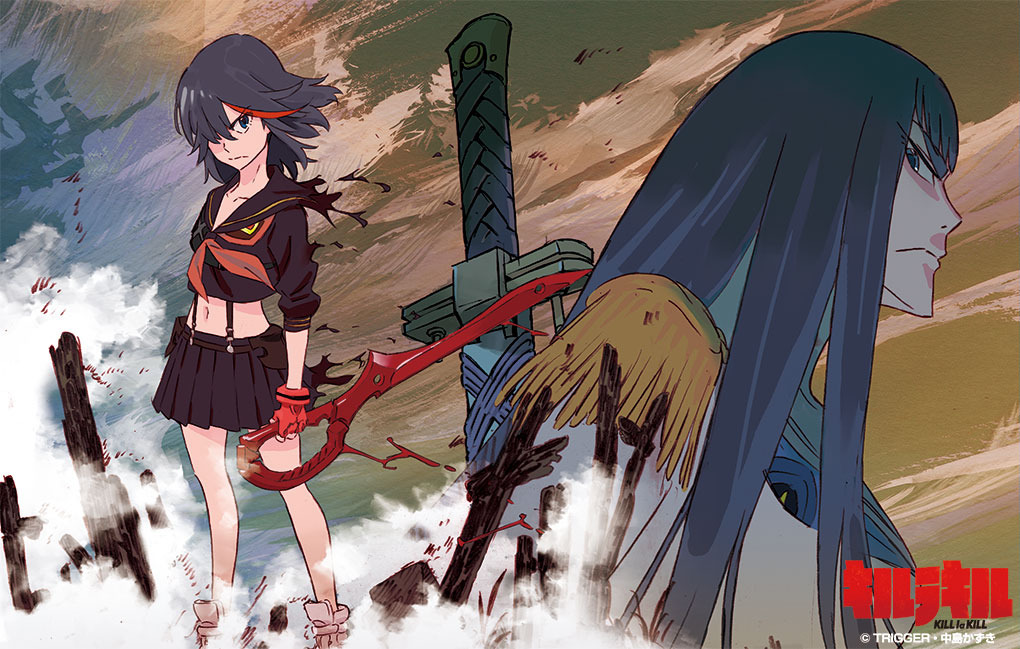
KILL la KILL: The Clothes Make the [wo]Man!
Kill la Kill is the debut television series from relatively new Studio Trigger (Inferno Cop, Little Witch Academia). The company was founded by Hiroyuki Imaishi (Gurren Lagann, Panty & Stocking, Dead Leaves) and Masahiko Otsuka when they decided to leave the legendary animation studio Gainax (Neon Genesis Evangelion, FLCL, Gurren Lagann).
Kill la Kill is the story of Ryuko Matoi, a teenage girl who is on a quest to avenge her father's death. Her weapon of choice: one half of a giant pair of scissors. Her journey takes her to Honnouji Academy, ruled by the iron fist of the school's president Satsuki Kiryuin, in search of information about her father's killer. She charges head first into battle without a second thought and is summarily beaten. Ryuko soon stumbles upon her father's secret lab and reluctantly comes to play host to a sentient school uniform capable of giving her superhuman abilities similar to those she encountered on her first trip to the school. Thus begins the over-the-top, frenetic action that is Kill la Kill's signature.
Kill la Kill is an epic that hits the ground running and refuses to stop no matter how many walls it may hit along the way! Yes, there are a lot of cliches in that statement but they are also accurate. The shows ostentatious execution is meant to be a satire of similar shows that came before it. Its eccentric, often immature nature may be a difficult barrier to cross for some people but for those who choose to embrace the insanity they are in for one of the funnest rides in the past decade! Even though Kill la Kill makes use of so many common story tropes the series works because it commits so fervently to its execution of these tropes. It flat out doesn't give a shit about what you think! It does what it wants, either you're on board or you get left in its gleeful wake of destruction.
The music in this series does a fantastic job of building tension and adding to the fast-paced battle sequences that permeate the series. We have Hiroyuki Sawano to thank for this. He is a rapidly rising star in the world of anime music composition. His credits make up a rather small, but notable list featuring titles such as Blue Exorcist, Attack on Titan, Guilty Crown, and Sengoku Basara. He has quickly become one of my favorite composers and a selling point for any new show. As soon as the music kicks off my blood starts pumping and goosebumps appear on my skin, it makes you want to jump out of your chair and cheer on Ryuko as she fights tooth and nail to find the answers she so desperately seeks. Just thinking about the score makes me want to vent my frustrations by breaking things! In a good way!
As much as I love Kill la Kill it is not without its flaws, though they are few in number. The animation quality varies frequently but Trigger does a good job at managing their budget. The sequences that need more animation receive it while others are acted out via borderline stop-motion animation. The impressive design work and vibrant color palette help to keep the show a visual feast even when there is not much going on. The only other issue I had from time to time was difficulty in keeping up with the subtitles. It is not uncommon for the characters to get to speaking so quickly and in such volume that you may have to pause and/or rewind a bit so you can catch everything that is being said. Every character has a soap box and they all love to grandstand.
Like Ryuko's best friend, Mako Mankanshoku, Kill la Kill is pure, obnoxious joy! It is unabashed in everything it does and seeks only to thoroughly entertain those that choose to watch it. Even the fanservice that appears throughout the entire show is so extreme that it ceases to be sexy and turns into a parody. It is this dedication to the extreme nature of the show that makes it something special. Kill la Kill is destined to become a classic, gateway anime that is sure to inspire a new generation of fans. This show certainly won't appeal to everyone but everyone should give this show a chance. There is so much more I would love to talk about but then I would be entering into the territory of massive spoilers so hopefully what I have written will be enough to pique your interest! Should you choose to venture down this proverbial rabbit hole, be sure to have some tissues handy, manly tears are bound to be shed at various points in the story. Don't delay! Pull the Trigger!! Thank me later. ... or don't! But still watch the show!
Kill la Kill is streaming on Crunchyroll and Hulu.
As much as I love Kill la Kill it is not without its flaws, though they are few in number. The animation quality varies frequently but Trigger does a good job at managing their budget. The sequences that need more animation receive it while others are acted out via borderline stop-motion animation. The impressive design work and vibrant color palette help to keep the show a visual feast even when there is not much going on. The only other issue I had from time to time was difficulty in keeping up with the subtitles. It is not uncommon for the characters to get to speaking so quickly and in such volume that you may have to pause and/or rewind a bit so you can catch everything that is being said. Every character has a soap box and they all love to grandstand.
Like Ryuko's best friend, Mako Mankanshoku, Kill la Kill is pure, obnoxious joy! It is unabashed in everything it does and seeks only to thoroughly entertain those that choose to watch it. Even the fanservice that appears throughout the entire show is so extreme that it ceases to be sexy and turns into a parody. It is this dedication to the extreme nature of the show that makes it something special. Kill la Kill is destined to become a classic, gateway anime that is sure to inspire a new generation of fans. This show certainly won't appeal to everyone but everyone should give this show a chance. There is so much more I would love to talk about but then I would be entering into the territory of massive spoilers so hopefully what I have written will be enough to pique your interest! Should you choose to venture down this proverbial rabbit hole, be sure to have some tissues handy, manly tears are bound to be shed at various points in the story. Don't delay! Pull the Trigger!! Thank me later. ... or don't! But still watch the show!
Kill la Kill is streaming on Crunchyroll and Hulu.
| Ryuko Matoi (left), Satsuki Kiryuin (right). |
Monday, March 24, 2014
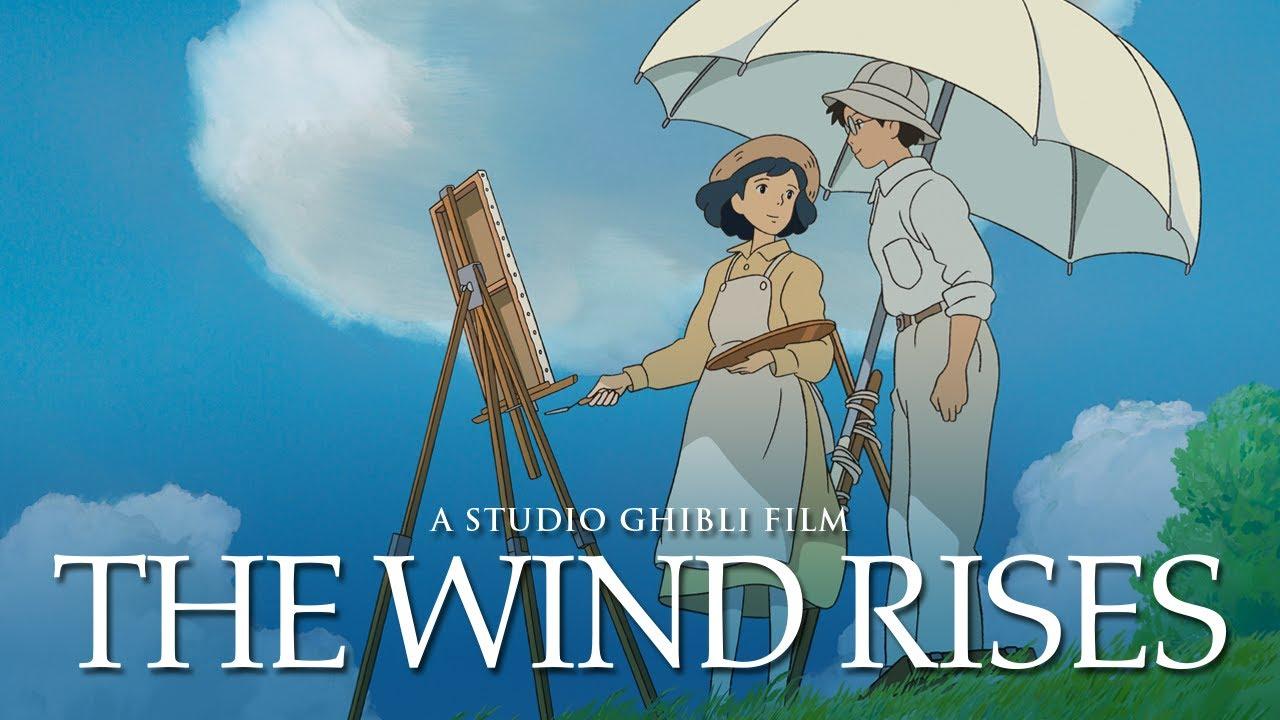
The Wind Rises: I'm Glad I Wasn't Holding My Breath
This review is of the dub. I have not seen the Japanese version of the film nor do I have any extensive knowledge on the historical accuracy or context of certain aspects of the film.
Tonight
I went to see Hayao Miyazaki's (supposed) final film, The
Wind Rises.
Even
though he is the legendary director of titles such as Princess
Mononoke and
Spirited
Away (the
only anime to win an Oscar)
I
did not go into this movie with the highest of expectations. It
is a loose, autobiography about the famous (or infamous) aerospace
engineer Jiro Horikoshi, the man who designed the prototype plane
that would become the infamous Japanese Zero, the plane responsible
for the massacre at Pearl Harbor. The movie tells a condensed story
of Jiro's life from his childhood up until he creates the fighter
plane that would be revolutionary for the Japanese military. Being a
Studio Ghibli film it still has some fanciful moments that come in
the form of vivid dreams.
I had heard about some of the controversy surrounding the film;
some felt that it was very jingoistic due to the fact that the film
never addressed what the planes were eventually used for as well as
painting its inventor as a hapless collaborator,
but
that did not phase me in the least. I watched this movie simply as a
longtime fan of anime and Studio Ghibli. I really wish I could say
this film exceeded my expectations but it did not.
Typical
of a Studio Ghibli production, the animation is stunning. They spare
no expense whenever Hayao Miyazaki wants to make a film. Since wind
is a central theme to the movie the viewer is treated to shots of
planes soaring gracefully through the clouds, whimsical dream
sequences full of prototype flying machines, and massive fields of
grass rustling frantically in the frequent gales. It is a vibrant
and lush landscape, I found myself wanting to dive into it so I could
simply lay on the inviting grass and drift into a deep sleep.
But
then the characters start talking... For the most part the English
dub is serviceable, it sounds as good as a standard dub for a Ghibli
movie. However there were a few characters that were so horribly
awkward in their deliveries that I almost burst into laughter (the
people behind couldn't contain themselves). Joseph Gordon-Levitt
voiced the main character, Jiro Horikoshi. For the most part he did
an adequate job, only stumbling during the more subdued moments of
the film. He has a fairly mono-toned performance, from what I've
heard about the Japanese version though, I believe this to be
intentional. In the Japanese dub Jiro is voiced by the famous (or
infamous) director of Neon
Genesis Evangelion,
Hideaki Anno. As far as I know The
Wind Rises
was
the first time he had ever acted, but being best friends with someone
like Miyazaki does have its advantages. Both
Miyazaki and Anno are notoriously grumpy men, maybe that is why Anno
was chosen to voice the character that many theorize is supposed to
represent Miyazaki himself. This movie is commonly believed to be
one long piece of symbolism for the end of Miyazaki's career as a
director. If true, it is a brilliant way to punctuate a legendary
body of work. But the fact that this isn't the first time he has
“retired” has many, including myself, remaining very skeptical.
The
worst offender by far, when it comes to the issue of awkward
deliveries, goes to Werner Herzog as Castrop. His voice, coupled
with the extremely creepy look of the character, provided most of the
unintentionally hilarious moments of the film. Every time the camera
went in for a close-up on his character I could not help but be
reminded of everyone's favorite pedophile, Herbert, from Family
Guy.
Imagine him with a thick, German accent and you'll have a good idea
as to what I'm talking about.
The
story had some pretty bad pacing issues. It was way too slow, the
fact that there are very few exciting moments only makes
things worse. Had I been watching this movie in the comfort of my
own home I am certain I would have started dozing off rather early on
in the film. On the bright side, this movie is not habit forming
like some sleep aids are.
All-in-all,
The
Wind Rises
is certainly not the worst Ghibli movie (I give that "honor"
to Tales
from Earthsea)
but there isn't much I can find to praise about it. I recommend
waiting for it to come out on DVD/BD unless you are a diehard
Miyazaki fan or an airplane otaku (someone
with a strong passion for planes).
Monday, February 24, 2014
The Dandy Side of an Undead World
While watching Space Dandy, one of my favorite new anime, I was inspired by the ending of the episode in which the heroes encounter a virus that turns them, and ultimately the entire universe, into zombies. I know this may sound like a spoiler but it is not. This show is set up in a fashion similar to that of Futurama and other animated comedies, it has no ongoing plot and everything resets each week.
Having all life in the universe transformed into undead flesh eaters sounds tragic but they painted it in a light I have never seen before, one of positivity. Sure, everyone was a decaying pile of flesh stumbling about, but they could still carry on some semblance of their lives before their undeath. Instead of words they communicated with moans and grunts, they remained cognizant of their actions, and they squash their cravings for raw meat by eating large amounts of yogurt thanks to the enzymes it contained.
On a much grander scale, since everyone was a zombie there was no death, no sickness, no more world hunger, no war, no torture, no money problems, and no racism. All life had been converted to undeath thus uniting the universe under the same genus. For the first time in my life I found myself kind of wanting to be a zombie. It was a festering utopia, morbidly beautiful.
Here is a link to the episode I talked about, check it out for yourself!
http://www.hulu.com/watch/591450#i0,p1,d0
Here is a link to the episode I talked about, check it out for yourself!
http://www.hulu.com/watch/591450#i0,p1,d0
Monday, January 20, 2014
What I've been doing lately...
Hello! I'm still alive! I haven't posted in a while for a couple of reasons, the main one being that the new semester has started so I will be busy with school work for the next several months. A lot of which will consist of written assignments so I'm not going to be very interested in doing extracurricular writing. But if the mood strikes I will post something. The other reason being that I am trying to get my YouTube channel going again. I'm taking video production classes in an effort to make it the best it can be. Most of what I would typically write will be filmed and posted to YouTube. When I post things in the future I will link to them on here. In the meantime, feel free to check out what I have so far and subscribe if you feel so inclined. I'll talk at ya again soon!
Otaku HQ
https://www.youtube.com/Jinruiai/
Otaku HQ
https://www.youtube.com/Jinruiai/
Subscribe to:
Posts (Atom)